What is a Modern Plant Wall?
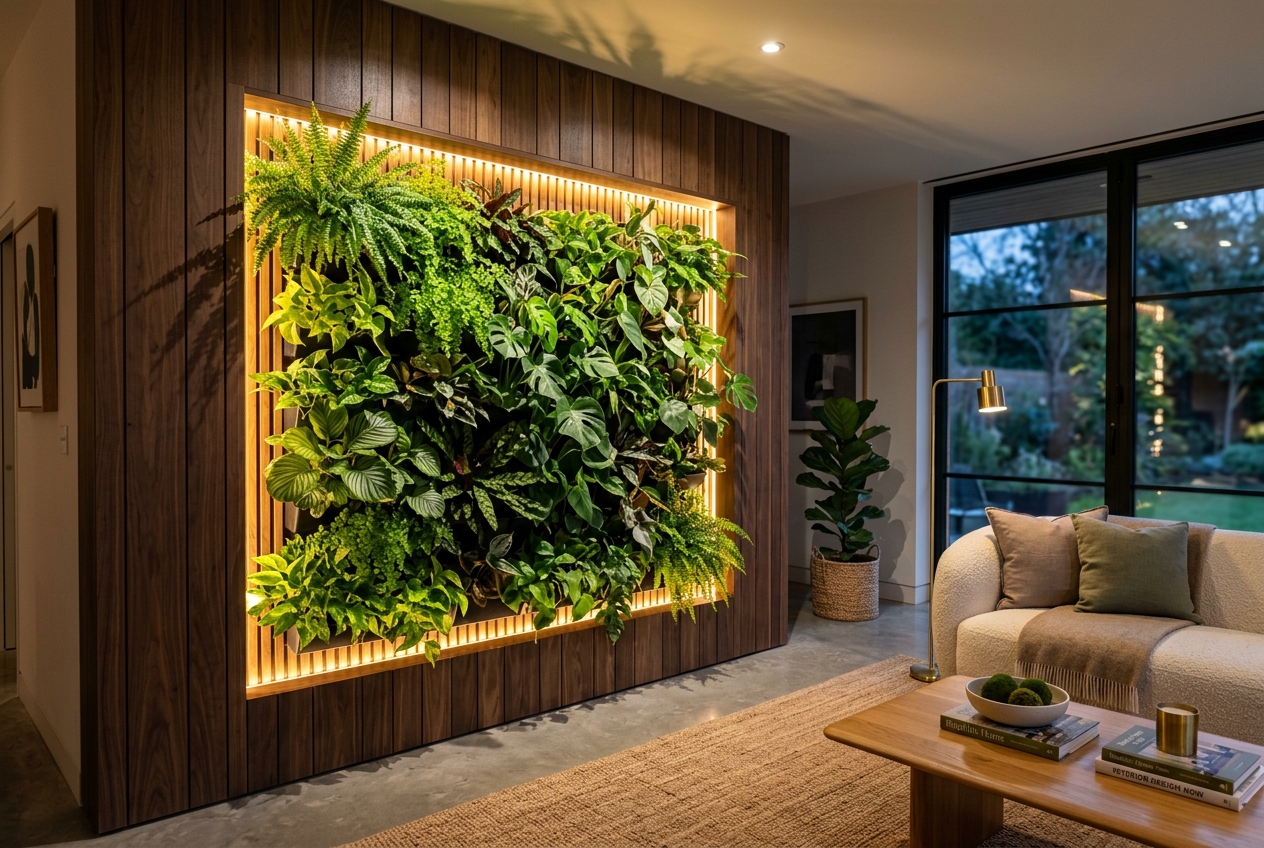
A modern plant wall is a vertical garden system that mounts directly to walls, allowing you to grow plants vertically. Unlike traditional potted plants, a plant wall uses modular panels, felt pocket systems, or hydroponic tubes to hold soil and roots. Living plant walls feature real, growing plants that require soil and watering systems, while faux or preserved moss walls offer maintenance-free alternatives. Choosing the right system depends on your room size, budget, and how much maintenance you are willing to perform.
Why LED Lighting Elevates a Plant Wall
Integrating LED lighting into a plant wall design does more than illuminate the foliage—it creates visual depth and soft shadows that bring the wall to life. Placing LED strip lights along the frame or behind the wood panels casts a warm backlight wash, highlighting leaf shapes and textures. In the evening, the glowing LEDs transform the green wall into a stunning focal piece, casting a soft ambient glow across the room.
Types of LED Lighting: Grow Lights vs. Ambient Accent LEDs
When designing your lighting layout, it is vital to balance plant health and room styling. Full-spectrum LED grow lights emit specific light wavelengths (red and blue spectrums) that support natural photosynthesis, making them essential for indoor areas without window access. In contrast, ambient accent LEDs are designed for styling, emitting warm yellow or white light that highlights leaf details. Combining both lighting types ensures your plants remain healthy while casting an inviting glow.
Best Plant Species for a Wall Display
Selecting the correct plant species is essential for keeping your vertical garden green and healthy. For low-light rooms with ambient LEDs, select hardy, shade-tolerant plants like pothos, philodendron, snake plants, and bird’s nest ferns. These species survive well with minimal light and are easy to maintain. If you install full-spectrum grow lights, you can choose more demanding plants like calatheas, crotons, and flowering air plants, creating a colorful wall display.
Structural Options: Modular Panels, Felt Pockets, or Hydroponics
The structural backing of your plant wall determines how you water and care for your plants. Modular plastic panels hold individual pots and allow you to replace plants easily. Felt pocket systems are lightweight and breathable, making them great choices for smaller DIY setups. For large-scale professional installations, hydroponic systems grow plants in water without soil, using automatic pumps to circulate nutrients, reducing maintenance.
Placement Considerations for Indoor Walls
Where you place your plant wall determines its success and how long the plants survive. Select a wall that receives indirect natural daylight, avoiding dark closets or hallways without airflow. Ensure the wall structure is strong enough to support the weight of wet soil and planters. Placing the green wall near electrical outlets is also important for powering your LED lighting and automatic watering pumps.
Color Temperature and Lighting Mood Options
The color temperature of your LEDs defines the room’s atmosphere. Warm white LEDs (around 2700K) emit a relaxing golden glow that makes living rooms feel cozy and inviting. Cool white LEDs (around 4000K) provide a bright, clean light that highlights plant details, making them great choices for modern kitchens and home offices. Color-changing smart bulbs allow you to customize color accents, creating a fun, interactive display.

Watering and Irrigation Systems for Low-Maintenance Care
Watering is the most challenging aspect of plant wall care, and installing an irrigation system is key to keeping it simple. Built-in drip irrigation systems use thin tubes to water each plant pocket automatically on a timer. Hydroponic systems pump water and nutrients continuously through the root panel. For smaller DIY setups, hand watering with a long-spout watering can or spray bottle is a practical, budget-friendly alternative.
Cost Considerations: DIY vs. Professional Installation
Building a plant wall can range from an affordable DIY weekend project to a luxury professional installation. A basic DIY setup using felt pockets, hanging pots, and LED strip lights costs around $100 to $250. Large-scale professional living walls with automatic irrigation, custom metal frames, and full-spectrum LED grow lights require experienced installers and can cost upwards of $1000, making it important to plan your budget.

Pairing the Plant Wall with Surrounding Decor
To integrate the plant wall into your room design, pair it with natural, organic furniture and textures. Place wood coffee tables, woven jute rugs, and cream linen chairs near the green wall to emphasize the natural theme. Frame the plant wall with dark stained wood paneling to add contrast, keeping the rest of your wall decor simple so the green wall remains the star.

Maintenance and Plant Health Tips
Regular maintenance is essential for keeping your vertical garden looking fresh and healthy. Prune dead leaves regularly to encourage new growth, and wipe dust off leaves so they can absorb light easily. Check soil moisture levels weekly to avoid root rot. Use a light, liquid plant food monthly to provide essential nutrients, and keep your LED grow lights active on a timer for 10 to 12 hours a day.
Common Mistakes to Avoid when Designing
Avoid these key mistakes to ensure your plant wall project is successful. First, never paint the wall behind your planters with water-sensitive paint; use a waterproof backer board to protect your drywall from moisture. Second, avoid using glossy light panels that create harsh glare. Third, do not select plants with different watering needs for the same pocket panel; group thirsty ferns together and dry succulents on separate shelves.