1. Understanding Refrigerator Configurations
Refrigerators are categorized into four primary door styles, each offering distinct storage access and space benefits:
- French Door: Features two side-by-side doors on top for fresh food and a pull-out freezer drawer below. This design places fresh ingredients at eye level and accommodates wide platters. French doors are highly popular for open layouts but require a larger budget.
- Side-by-Side: Splits the refrigerator and freezer vertically. This style offers balanced access to both fresh and frozen foods. The narrow doors require less swing clearance, making them excellent for tight gallery kitchens, though narrow shelves can limit wide items.
- Bottom Freezer: Places a single refrigerator door on top and a pull-out freezer drawer below. This design is highly functional for households that prioritize fresh food access over frozen items, offering clean, mid-range pricing.
- Top Freezer: The classic configuration with the freezer on top and the fresh compartment below. These models are generally the most affordable, highly energy-efficient, and durable, though they require bending down to access daily fresh items.
2. Counter-Depth vs. Standard-Depth Sizing
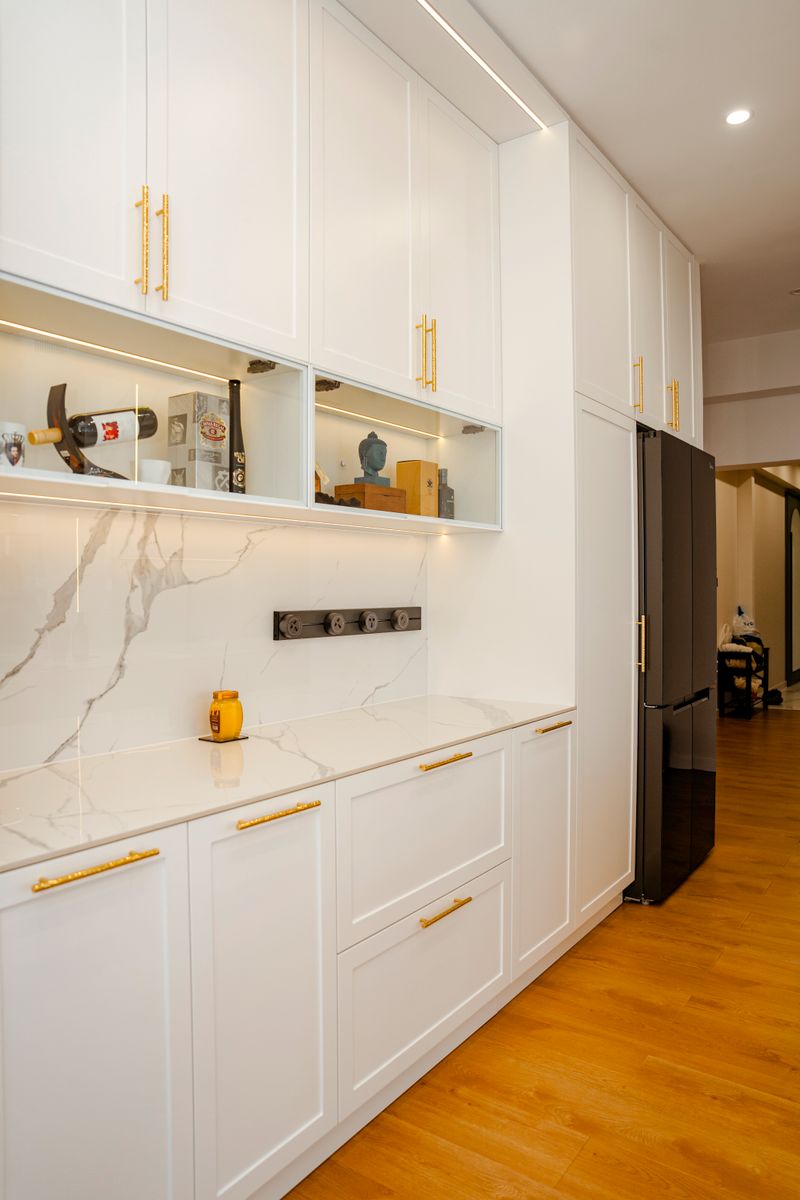
Understanding unit depth is essential to prevent your refrigerator from sticking out past your kitchen counters. Standard-depth refrigerators measure 30 to 36 inches deep, extending several inches beyond typical 24-inch-deep cabinets to maximize internal capacity. Counter-depth refrigerators measure 24 to 28 inches deep (excluding doors and handles), aligning flush with the front edge of your cabinetry. This creates a clean, built-in appearance that preserves walkway space in narrow kitchens, though it sacrifices a few cubic feet of interior storage.

3. Measuring Your Space for a Perfect Fit
Measurement errors are the most common cause of refrigerator returns. Before ordering, verify these three critical clearance measurements, and cross-reference them with the model's installation guide:
- Width: Measure the top, middle, and bottom of the cabinet cutout. Choose a unit that leaves at least 1/2 inch of clearance on both sides to allow the refrigerator to slide in easily.
- Height: Measure from the floor to the bottom of the upper cabinet. Make sure to check the unit's height with and without the door hinge, as hinges often require an extra 1 to 2 inches of height.
- Depth and Door Swing: Measure from the back wall to the front edge of the counters. Ensure that doors can open past a 90-degree angle without hitting adjacent walls, pantries, or kitchen islands, allowing internal drawers to slide open fully.
- Ventilation Clearance: Refrigerators release heat from the back and sides. Leave at least 1 to 2 inches of space behind the unit and 1 inch above to prevent the compressor from overheating and wearing out early.
4. Capacity and Household Size Guidelines
Refrigerating unnecessary space wastes electricity, while overcrowding blocks cold air circulation, causing food to spoil. As a general rule of thumb, target 4 to 6 cubic feet of fresh food space per adult in the household. Use this quick reference guide to estimate your capacity needs:
| Household Size | Recommended Capacity | Ideal Configuration |
|---|---|---|
| 1 - 2 People | 14 - 18 cubic feet | Top Freezer / Bottom Freezer |
| 3 - 4 People | 18 - 22 cubic feet | Bottom Freezer / Side-by-Side |
| 5+ People (Large Families) | 22 - 30 cubic feet | French Door / Built-In Columns |
5. Water Dispensers and Ice Makers
Decide whether you prefer an external or internal water dispenser. External dispensers on the door offer quick access but require cutting through the refrigerator insulation, which can reduce energy efficiency and take up fresh food door storage. Internal water dispensers and ice makers keep the exterior looking clean, modern, and flush, but require opening the door to access water. Ensure you have a dedicated cold water line installed behind the refrigerator cutout before delivery day.

6. Energy Efficiency, Noise, and Maintenance
Look for refrigerators with an Energy Star certification, which use at least 10% less electricity than non-certified models, saving money on utility bills over time. In open-concept living and cooking layouts, noise level is also an important factor; look for units rated below 40 dBA (decibels) to prevent the compressor hum from interrupting your living room conversations. For maintenance, remember to vacuum dust off the condenser coils behind or underneath the unit twice a year to keep the cooling system running efficiently.