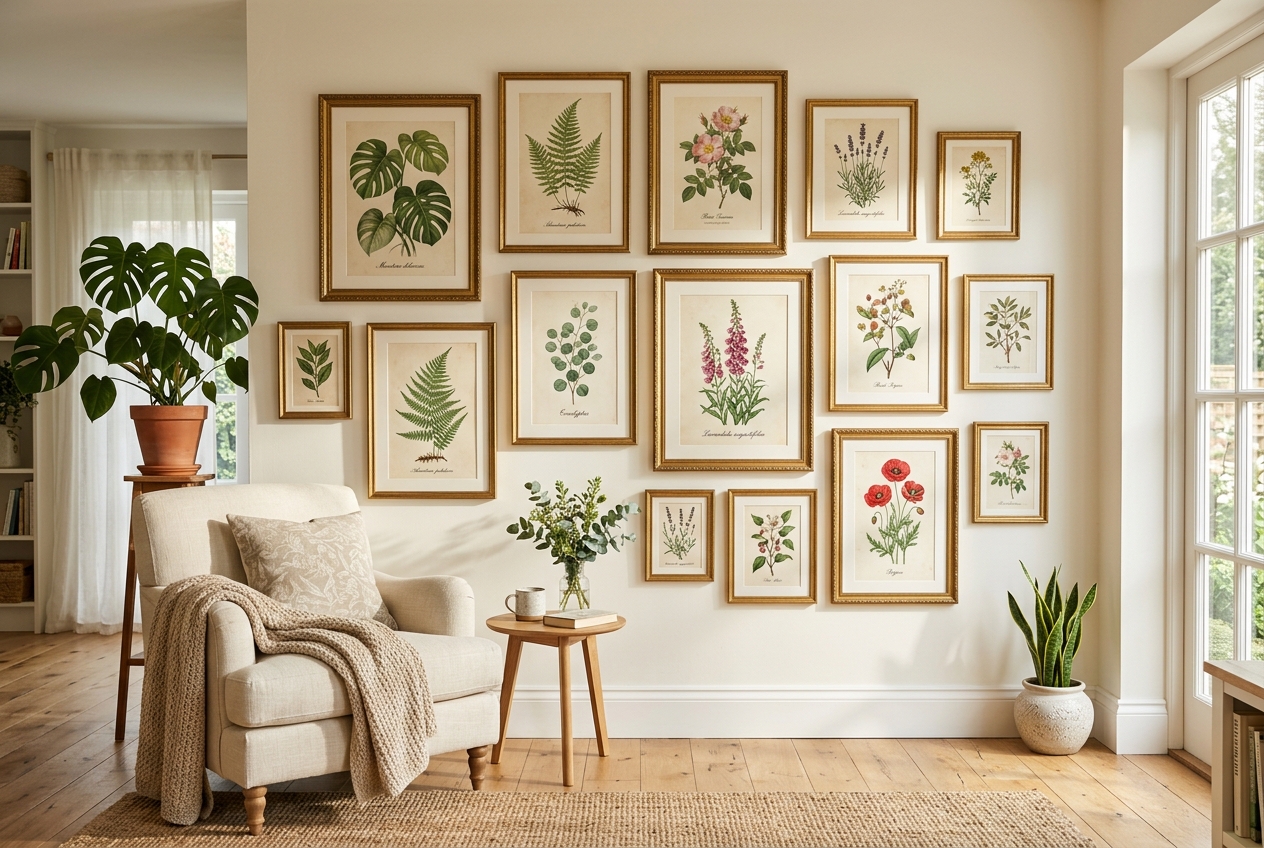
1. Vintage Botanical Illustrations in Matching Frames
Vintage botanical illustrations represent a classic, scientific appreciation of nature that brings historic charm to modern homes. These detailed sketches, often featuring antique paper textures, look beautiful when grouped together on a main wall. To create a clean, organized look, place them in matching light oak or antique gold wood frames. Spacing the frames evenly (around 2 to 3 inches apart) creates a balanced display that looks beautiful above a living room console table or hallway bench.

2. Pressed Leaf and Flower Art in Glass Frames
Pressed leaves and dried flowers framed behind clear glass panels bring a delicate, three-dimensional texture to your walls. The floating glass design allows your wall color to show through, making the botanical specimens appear suspended in mid-air. For the best display, select leaves with strong details, like ferns, maple leaves, or ginkgo foliage. Frame them in brass floating glass frames and hang them opposite windows to catch daylight, casting soft shadows on your wall.

3. Large-Scale Single Botanical Print as an Anchor Piece
A single, large-scale botanical print is an effective way to ground a room design without cluttering the wall. A close-up illustration of a Monstera leaf or a stylized pine branch serves as a beautiful focal point. Select a frame that coordinates with your furniture, like stained walnut or sleek black metal. Hang the print in the center of the wall above your sofa or bed to establish a balanced design that feels clean, spacious, and modern.
4. Symmetrical Grid Layout of Matching Botanical Prints
For a structured, formal design, arrange a group of matching botanical prints in a symmetrical grid. A grid of six or nine matching frames creates an organized focal point that grounds the room. Ensure the spacing between each frame is identical to maintain the clean grid pattern. This layout works beautifully in formal dining rooms or entryways, bringing clean geometric order and natural beauty to empty wall spaces.

5. Mixed-Size Botanical Prints in an Eclectic Salon-Style Arrangement
A salon-style gallery wall combines different frame sizes and art styles to create a relaxed, collected-over-time look. Mix vintage illustrations, watercolor paintings, and pressed leaves in wood, metal, and painted frames. Start by positioning the largest print in the center and arrange smaller frames around it. Keep the spacing relaxed but balanced to create an engaging wall display that reflects your personal style.

6. Black and White Botanical Line Art for a Modern Look
For modern, minimalist spaces, black-and-white botanical line drawings are clean and stylish wall choices. These illustrations capture leaf shapes and plant details in simple black ink lines on textured white paper. Frame them in thin black metal or white wooden frames to keep the look clean and contemporary. This minimalist style coordinates easily with any color palette, making it a versatile choice for modern bedrooms and home offices.
7. Watercolor Botanical Prints for a Soft, Artistic Feel
Watercolor botanical paintings bring a soft, artistic energy to a room. The natural blending of green, teal, and amber watercolor washes captures the soft details of plants in a relaxed style. Frame watercolor prints with wide white mat boards and light wood frames to highlight the delicate colors. This soft style works beautifully in nurseries, bedrooms, or cozy reading corners, creating a calm, relaxing space.

8. Tropical Leaf Prints for a Bold, Statement Look
Tropical leaf prints are bold, colorful ways to add vibrant style to your walls. Large illustrations of palm fronds, banana leaves, or monstera foliage bring energy and tropical warmth to the space. Frame them in dark wood or gold frames to add contrast. This bold style works well on entry walls or behind a living room sofa, creating a lush, nature-inspired focal point that welcomes guests.

9. Antique Herbarium-Style Specimen Art
Antique herbarium specimen art features dried plant specimens mounted on aged paper with handwritten scientific notes. This historical look brings character and vintage style to your walls. Frame the sheets in dark walnut or distressed wood frames to highlight the aged paper. Arrange them in a neat row or grid to create an interesting wall display that feels like a vintage cabinet of curiosities.

10. Botanical Art Paired with Mirrors for Added Depth
Mix mirrors into your botanical gallery wall to bounce daylight around the room and make the display feel spacious. Placing a round brass mirror in the center of your frame layout adds visual depth and breaks up the square lines of the frames. The mirror reflects your indoor plants and prints, making the natural display feel larger and brighter.

11. Framed Dried Flowers as Three-Dimensional Botanical Art
Framed dried flowers in deep shadow boxes add three-dimensional texture and natural color to your walls. Pressed lavender, baby's breath, or wild roses maintain their shapes and soft colors behind glass. Use linen-lined shadow box frames to provide a soft backdrop for the botanical shapes, creating an organic, artistic display that coordinates beautifully with wood furniture.

12. Monochromatic Botanical Prints in a Single Color Family
For a clean, modern look, select botanical prints in a single color family, like forest greens, soft blues, or warm rust tones. Using a single color theme keeps the display organized and easy to coordinate with your room. Frame the prints in identical thin wood frames and hang them in a row. This creates a cohesive, designer-approved display that brings color and style to empty walls.
13. Botanical Art Mixed with Abstract Pieces for Contrast
Mix organic botanical illustrations with abstract shapes or landscapes to create an engaging, modern gallery wall. The combination of detailed leaf drawings and simple abstract shapes adds color contrast and visual variety. Choose frames in matching colors to keep the layout organized, creating a unique display that highlights your creative style.

14. Floating Shelf Display of Botanical Art and Small Plants
Use floating wooden shelves to display your framed botanical prints alongside real, live houseplants. Placing small trailing plants, like a pothos or ivy, next to your framed prints blends the artwork with real foliage. You can overlap frames and swap prints easily without making holes in the walls, creating a flexible, green display that brings life to empty spaces.
15. Botanical Wallpaper Panel as a Gallery Wall Centerpiece
For a dramatic focal point, frame a large panel of botanical wallpaper as the center of your gallery wall. Select a wallpaper with detailed plant patterns and frame it in a large wood frame. Place smaller coordinating prints on either side to complete the display. This creates a beautiful, custom wall feature that brings the rich colors and textures of a botanical garden indoors.