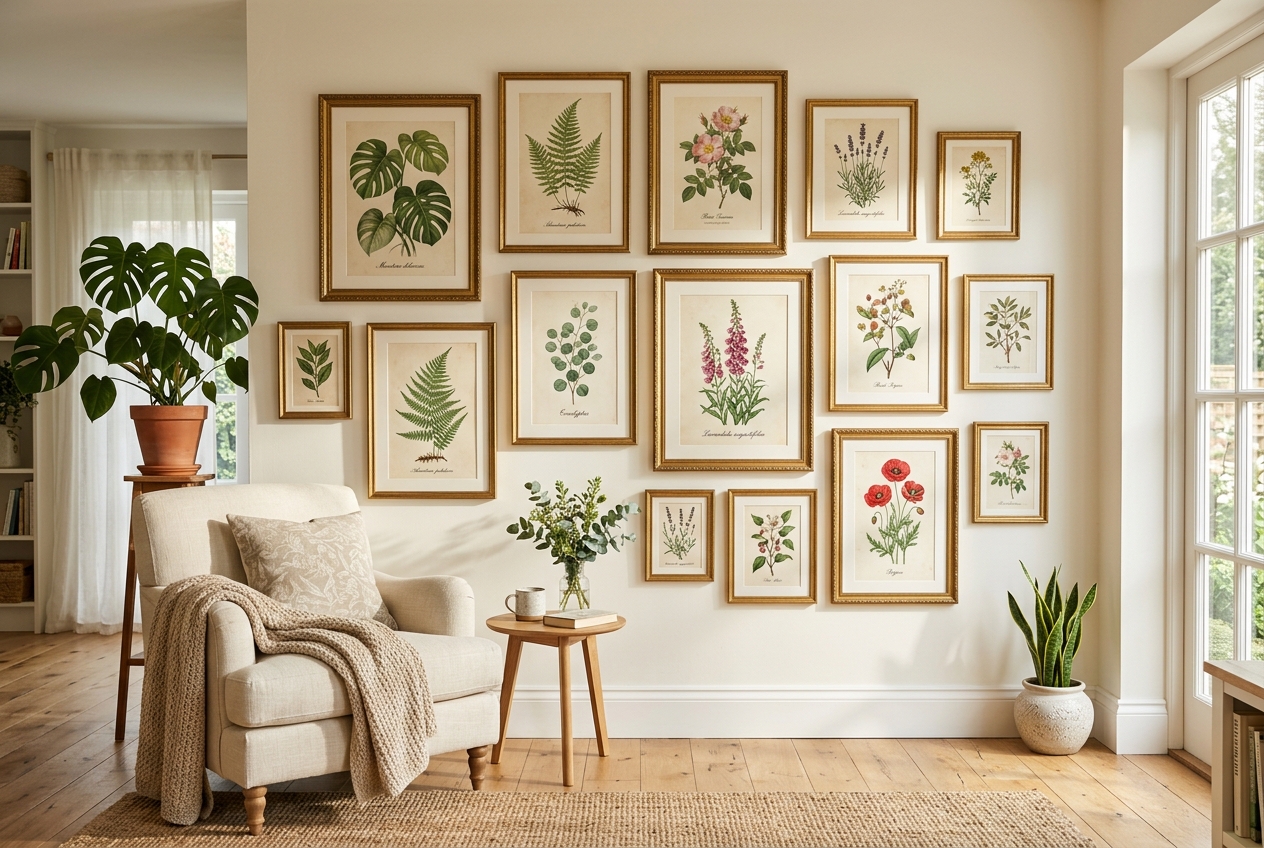
I. Color Schemes & Palettes (1-7)
1. Monochromatic Soft Whites
Build a bright bedroom look by layering warm white paint, white linen bedding, and cream carpets. Monochromatic white styling reflects window daylight cleanly, helping small layouts feel open and spacious.
2. Serene Sage Green Accent
Paint the focus wall behind the headboard in soft sage green. Muted green tones bring a sense of nature indoors, helping you relax while coordinating beautifully with oak bedside cabinets.
3. Warm Terracotta and Clay
Layer warm terracotta, sand, and peach tones to add natural warmth. If you love this color palette, see our earth-tone bedroom guide for detailed design rules.
4. Grounding Charcoal and Slate Grey
Use a dark gray wall paint to create a cozy, cocoon-like sleeping zone. Charcoal gray absorbs harsh daylight, creating a peaceful atmosphere that matches warm bedside reading lights.
5. Grounding Taupe and Greige
Combine grey and beige wall paint to create greige. Greige offers a versatile backdrop that transitions between warm wood furniture and cool nickel lighting fixtures.
6. Mood Indigo and Dark Navy
Add rich navy paint on window moldings or built-in closets. Deep blue shades look classic and grounding, especially when highlighted by polished brass wall sconces.
7. Pale Lavender and Soft Violet
Paint bedroom ceilings in pale lavender to reflect window light. Soft violet tones add a gentle highlight that softens straight drywall angles without clashing with beige curtains.
II. Wall & Ceiling Treatments (8-14)
8. Symmetrical Shiplap Accent Wall
Install horizontal shiplap panels behind the bed headboard. Horizontal lines guide the eye outwards, helping narrow bedroom layouts feel wider and adding rustic farmhouse texture.
9. Picture Frame Molding
Mount thin wood trim on flat drywall surfaces to create elegant picture frames. Symmetrical wall molding adds traditional detail, turning empty walls into design focus points.
10. Floral Accent Wallpaper
Apply botanical or floral print wallpaper to a single wall. Limit the pattern to the bed wall to prevent the wallpaper from overcrowding small, compact bedroom plans.
11. Lime-Wash Plaster Walls
Apply lime-wash plaster paint to create soft, textured walls. Lime-wash surfaces reflect ambient ceiling lights softly, giving bedrooms a relaxed, organic resort feel.
12. Wallpapering the Ceiling
Apply a soft patterned wallpaper to the bedroom ceiling. Decorating the ceiling directs the eye upward, making standard bedroom ceiling heights feel taller and cozier.
13. Vertical Wood Slat Accent Wall
Install thin vertical oak slats behind the bed. The vertical wood lines draw the eye upwards, adding modern texture while coordinating with natural wood platform beds.
14. Painted Beadboard Panels
Mount painted beadboard panels along the lower half of the wall. Beadboard wainscoting protects walls from bed rubs while adding traditional farmhouse character.
III. Bedding & Textiles (15-21)
15. Pure Washed Linen Bedding
Select washed linen sheets in soft beige or white. Linen is highly breathable and features organic wrinkles, adding a casual, cozy feel to platform beds.
16. Waffle-Knit Throw Blankets
Drape a textured waffle-knit cotton blanket across the foot of the bed. Waffle-knit blankets add physical warmth and layer details, balancing flat duvet surfaces.
17. Velvet Accent Pillows
Place two velvet throw pillows in olive green or ochre in the center of the bed. Velvet adds a soft highlight, reflecting warm bedside reading lights beautifully.
18. Quilted Linen Coverlets
Layer a quilted coverlet beneath your main duvet. A quilted coverlet provides extra physical warmth during winter while letting you fold back the main duvet for styling.
19. Tailored Linen Bed Skirts
Conceal open under-bed storage frames by styling a tailored linen bed skirt. Choose a skirt that sits 1/4 inch above the floorboards to maintain a clean layout.
20. Pure Silk Pillowcases
Style two silk pillowcases in champagne or white in front of your headboard. Silk adds an elegant texture that is soft underhand and gentle on hair and skin.
21. Duck-Feather Duvet Inserts
Select a high-loft duck-feather duvet insert. A fluffy duvet fills out linen covers cleanly, keeping the bed looking inviting and cozy.
IV. Lighting Layering (22-28)
22. Swing-Arm Bedside Wall Sconces
Mount swing-arm reading lamps on the wall directly above nightstands. Wall sconces clear nightstand surface space, allowing room for books and water glasses.
23. Dimmable Dome Pendant Lights
Hang warm pendant lights on either side of the bed. Dome lights cast downward illumination, creating an intimate glow that is perfect for winding down.
24. Hidden LED Cove Ceiling Lighting
Conceal warm LED strip lights along false ceiling recesses. Cove lighting projects a soft, indirect glow that removes shadows from overhead ceiling areas.
25. Cordless Ceramic Table Lamps
Place small cordless table lamps on dressers or shelves. Cordless lamps can be moved easily, providing a warm glow in corners without messy cable runs.
26. Directional Accent Uplighting
Place a small floor uplight behind bedroom accent plants. Uplighting casts organic leaf shadows against the walls, adding dramatic texture at night.
27. Brass Gooseneck Sconces
Install gooseneck sconces above art frames. Focused accent lights highlight the artwork details, creating a gallery look in bedroom walkways.
28. Rice-Paper Shade Lamps
Select a large rice-paper globe lamp to serve as your central ceiling light. Paper shades diffuse light softly, preventing glare above the bed.
V. Furniture Seating & Accents (29-35)
29. Bouclé Accent Armchairs
Place a curved bouclé armchair in empty bedroom corners. Bouclé upholstery adds soft, physical texture, making corner seating zones comfortable.
30. Slender Metal Nightstands
Pair low platform beds with slim metal nightstands. Slender metal profiles keep walkways looking open and lightweight, especially in narrow plans.
31. Upholstered Storage Benches
Place a fabric bench at the foot of the bed. Storage benches provide a handy seat for putting on shoes while hiding winter blankets out of sight.
32. Floating Desk Configurations
Mount a floating wooden desk ledge along an empty wall. A floating desk provides a functional study zone without taking up valuable floor space.
33. Cane-Backed Headboards
Select a bed frame featuring a woven cane headboard. Cane inserts introduce organic textures, breaking up solid drywall backings cleanly.
34. Nesting Bedside Tables
Use nesting wood tables instead of bulky nightstands. Nesting tables can be stacked together when not in use, keeping walkways clear.
35. Floating Corner Shelves
Install simple wood corner shelves to hold books. Utilizing corner walls saves main floor space, keeping small layouts open.
VI. Storage Solutions (36-42)
36. Under-Bed Pullout Drawers
Utilize under-bed pullout drawers on wheels to store seasonal linens. Under-bed storage keeps heavy storage boxes out of main bedroom walkways.
37. Floor-to-Ceiling Built-In Closets
Install built-in wardrobes that extend to the ceiling line. Floor-to-ceiling closets maximize storage capacity while looking like part of the wall.
38. Woven Rattan Baskets
Slide large rattan baskets onto lower closet shelves. Woven baskets add organic texture while keeping loose clothes and accessories organized.
39. Wooden Blanket Ladders
Lean a wooden display ladder against an empty wall to hold throws. Blanket ladders save closet space while serving as a cozy design feature.
40. Wardrobe Drawer Organizers
Use canvas dividers inside dresser drawers to separate socks, belts, and ties. Keeping drawer interiors organized ensures morning prep remains stress-free.
41. Recessed Storage Niches
Construct a recessed drywall niche behind nightstands to hold books and chargers. Storage niches save floor space while keeping the bed profile clean.
42. Wall-Mounted Corner Racks
Mount a brass hanging rack in the corner to hold next-day clothes. Hanging clothes vertically saves dresser drawer space cleanly.
VII. Layout & Space Planning (43-49)
43. Symmetrical Layout Designs
Center the bed along the main wall and place matching nightstands on either side. Symmetrical bedroom layouts look balanced, formal, and relaxing.
44. Bed Floating Configurations
In large bedrooms, float the bed in the center of the room with a vanity desk placed behind the headboard to define separate sleeping and prep zones.
45. Bedside Clearance Calculations
Allow at least 24 to 30 inches of open walk space between the edge of the mattress and the walls to ensure you can move comfortably around the bed.
46. Entryway Walkway Zones
Avoid placing large wardrobes directly next to the bedroom door. Keeping entryways clear allows light to enter the room, making it look spacious.
47. Bedside Screen Dividers
Place a wooden or paper screen divider beside the bed in open-plan spaces to separate the sleeping area from study desks and dressing tables.
48. Fireplace Framing Layout
If your room has a fireplace, position your accent chairs facing it at a 45-degree angle to create a cozy secondary seating zone.
49. Vanity Corner Planning
Position dressing tables near windows to take advantage of natural light for morning prep, keeping dressers out of primary walkways.
VIII. Texture Layering (50-56)
50. Flat-Weave Jute Runners
Place jute runners in bedroom walkways. Textured jute offers a durable surface underfoot while highlighting the light colors of painted walls.
51. Plush Sheepskin Accent Rugs
Drape a small sheepskin rug over a wood armchair. Soft sheepskin adds cozy physical comfort, making reading corners inviting.
52. Woven Rattan Accent Frames
Hang mirrors framed in woven rattan to add texture to empty walls. Rattan breaks up flat drywall surfaces cleanly.
53. Concrete Decor Accent Details
Style nightstands with small concrete planters or trays. Smooth concrete adds industrial contrast, balancing warm wood grains.
54. Leather Drawer Pulls
Replace metal dresser knobs with cognac leather loop pulls. Leather hardware adds a soft texture that is comfortable underhand.
55. Brushed Brass Hardware
Install brushed brass hinges and closet handles. Brass highlights the warm wood grains of wardrobes, adding traditional detail.
56. Heavy Chunky Knit Blankets
Fold a heavy knit blanket across the foot of the bed. Chunky knits add instant coziness and keep duvets looking tailored.
IX. Small Bedroom Strategies (57-65)
57. Murphy Bed Integrations
Install a wall-mounted Murphy bed in micro-apartments. Folding the bed away vertically during the day opens up the room floor space.
58. Wall-Mounted Floating Nightstands
Mount floating nightstand drawers directly to the wall. Wall-mounting nightstands exposes the floor beneath, helping small spaces look larger.
59. Sliding Mirror Closet Doors
Install sliding mirror doors on built-in wardrobes. Mirrors reflect daylight across the room, doubling the perceived space of the layout.
60. Low Platform Bed Bases
Use a low-profile platform bed base. Keeping the bed low leaves more open wall space above, helping standard bedrooms look tall.
61. Vertical Bookshelf Columns
Use tall, narrow vertical bookshelves to hold books. Vertical shelves maximize storage space while taking up a minimal floor footprint.
62. Tall Vertical Headboards
Select a bed frame featuring a tall, slender vertical headboard. A tall headboard draws the eye upward, making ceilings feel taller.
63. Pocket Door Installations
Replace swinging bedroom doors with sliding pocket doors. Pocket doors slide into the wall framing, clearing door swing clearances.
64. Sliding Door Partitions
Use sliding frosted glass doors to partition off open study corners, letting natural light filter through to desk zones.
65. Symmetrical Art Grids
Hang a grid of 4 small matching frames above nightstands to add clean visual detail without cluttering the walls.
X. Cozy & Modern Accents (66-75)
66. Soy Wax Candle Styling
Place two soy wax candles on dressers. Candlelight casts a warm, relaxing glow that is perfect for unwinding before bed.
67. Ambient Essential Oil Diffusers
Use an essential oil diffuser filled with lavender or chamomile mist to add a calming scent, keeping the bedroom relaxing.
68. 2700K Warm LED Bulbs
Select warm, amber-toned LED bulbs (2700K) for all nightstand lamps to cast a cozy glow, avoiding harsh blue light before sleep.
69. Soundproofing Linen Curtains
Hang thick, linen-lined drapes high and wide. Lined curtains absorb outdoor noise echo, keeping the bedroom quiet and peaceful.
70. Padded Headboard Backings
Upholster your headboard in soft linen or boucle fabric. A padded headboard provides comfortable support for reading in bed.
71. Smart Lighting Dimmers
Install dimmable switches for overhead ceiling lights. Dimmers let you adjust lighting levels easily as evening approaches.
72. Wireless Charging Stands
Use a nightstand with integrated wireless charging pads to power phones without messy cables cluttering the table surface.
73. Hidden Cable Channels
Conceal TV and lamp cords inside wall-mounted paintable channels to keep bedroom walkways looking clean and modern.
74. Matte Black Metal Pulls
Install matte black metal handles on closet doors. Dark handles contrast cleanly with white or cream cabinetry.
75. Landscape Art Prints
Hang a large framed landscape painting above the bed. Muted nature paintings add a peaceful highlight to the focal wall.