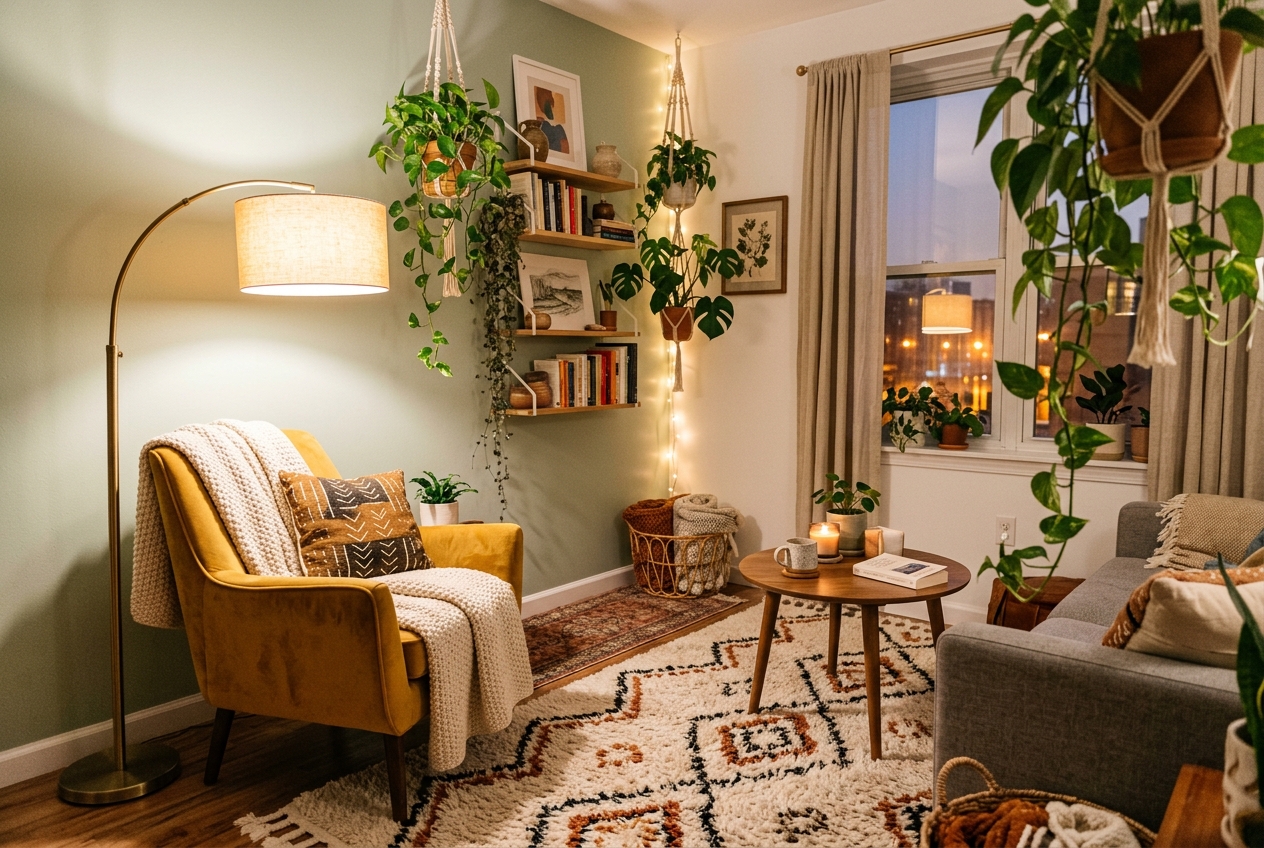
1. Low-Profile Platform Beds
Select a low-profile platform bed base. Keeping the mattress low leaves more open wall space above, helping the ceiling feel taller and cozier.
2. Under-Bed Pullout Storage Drawers
Utilize under-bed drawers on wheels to store winter clothes. Hiding boxes under the bed keeps heavy chests out of primary walkways.
3. Wall-Mounted Floating Nightstands
Mount floating nightstand ledges directly to the wall. Wall-mounting nightstands exposes the floor beneath, helping small spaces look larger.
4. Vertical Bookshelf Columns
Use tall, narrow vertical bookshelves to hold books. Vertical shelves maximize storage space while taking up a minimal floor footprint.
5. Sliding Mirror Closet Doors
Install sliding mirror doors on wardrobes. Mirrors reflect daylight across the room, doubling the perceived space of the layout.
6. Hanging Curtains High and Wide
Mount your curtain rods 4 to 6 inches above the window frame, extending the rods 8 inches past the side edges. This makes windows feel wider.
7. Warm, Neutral Color Schemes
Paint walls in a warm cream, sand, or greige. These soft colors reflect daylight softly. For details, see our earth-tone bedroom guide.
8. Symmetrical Art Grids
Hang a grid of 4 small matching frames above nightstands to add clean visual detail without cluttering the walls.
9. Bedside Swing-Arm Wall Sconces
Mount swing-arm reading lamps on the wall directly above nightstands. Wall sconces clear nightstand surface space, saving bedside areas.
10. Pocket Door Installations
Replace swinging bedroom doors with sliding pocket doors. Pocket doors slide into the wall framing, clearing door swing clearances.
11. Light Flat-Weave Jute Rugs
Place a light flat-weave jute rug under the bed. Jute textures soften hard floor tile surfaces. If you are choosing flooring, see our home flooring guide for ideas.
12. Floating Desk Ledges
Mount a floating wooden desk ledge along an empty wall. A floating desk provides a study zone without taking up valuable floor space.
13. Nesting Bedside Tables
Use nesting wood tables instead of bulky nightstands. Nesting tables can be stacked together when not in use, keeping walkways clear.
14. Hidden Storage Benches
Place a fabric bench at the foot of the bed. Storage benches provide a handy seat while hiding extra blankets out of sight.
15. Tall Vertical Headboards
Select a bed frame featuring a tall, slender vertical headboard. A tall headboard draws the eye upward, making ceilings feel taller.
16. Floating Corner Shelves
Install simple wood corner shelves to hold books. Utilizing corner walls saves main floor space, keeping small layouts open.
17. Wall-Mounted Pegboards
Mount a pegboard inside the closet door to organize belts, keys, and jewelry, saving drawer space cleanly.
18. Semi-Flush Mount Ceiling Lights
Install low-profile semi-flush ceiling lights instead of low chandeliers to keep center walkways clear.
19. Open-Base Lounge Chairs
Select accent chairs with thin metal legs. Open furniture bases let light pass through, keeping corners looking light.
20. Dimmable Ambient Lighting
Install dimmer switches for bedside lamps. Lowering light levels in the evening creates a relaxing transition before sleep.
21. Corner Bed Placements
Positioning the bed against a corner wall opens up the center floor area, creating space for study desks.
22. Built-in Nooks
Build shelving niches directly inside drywall framing to hold books, removing the need for floor bookcases.
23. Slender Wardrobe Closets
Use tall, narrow wardrobe closets that maximize vertical storage while preserving room walk paths.
24. Flat-Panel Cabinet Doors
Select handleless, push-to-open closet doors. Flat fronts blend into walls, keeping the room looking clean.
25. Bedside Valet Stands
Use a slender wooden valet stand in corner spaces to hang daily outfits, keeping clothes off the bed.
26. Under-Cabinet LED Lighting
Conceal warm LED strip lights along floating shelves. Indirect lighting removes shadows, keeping corners bright.
27. Sliding Frosted Glass Partitions
Use sliding glass partitions to close off study zones, letting daylight pass through while separating rooms.
28. Large Round Mirrors
Hang a round mirror above floating nightstands to reflect bedside lamp light, brightening dark corners.
29. Woven Basket Storage
Slide shallow woven baskets onto closet floors to store shoes, keeping closet floors looking organized.
30. Transparent Acrylic Furniture
Use clear acrylic chairs or side tables. Transparent materials are visually lightweight, helping small rooms feel spacious.