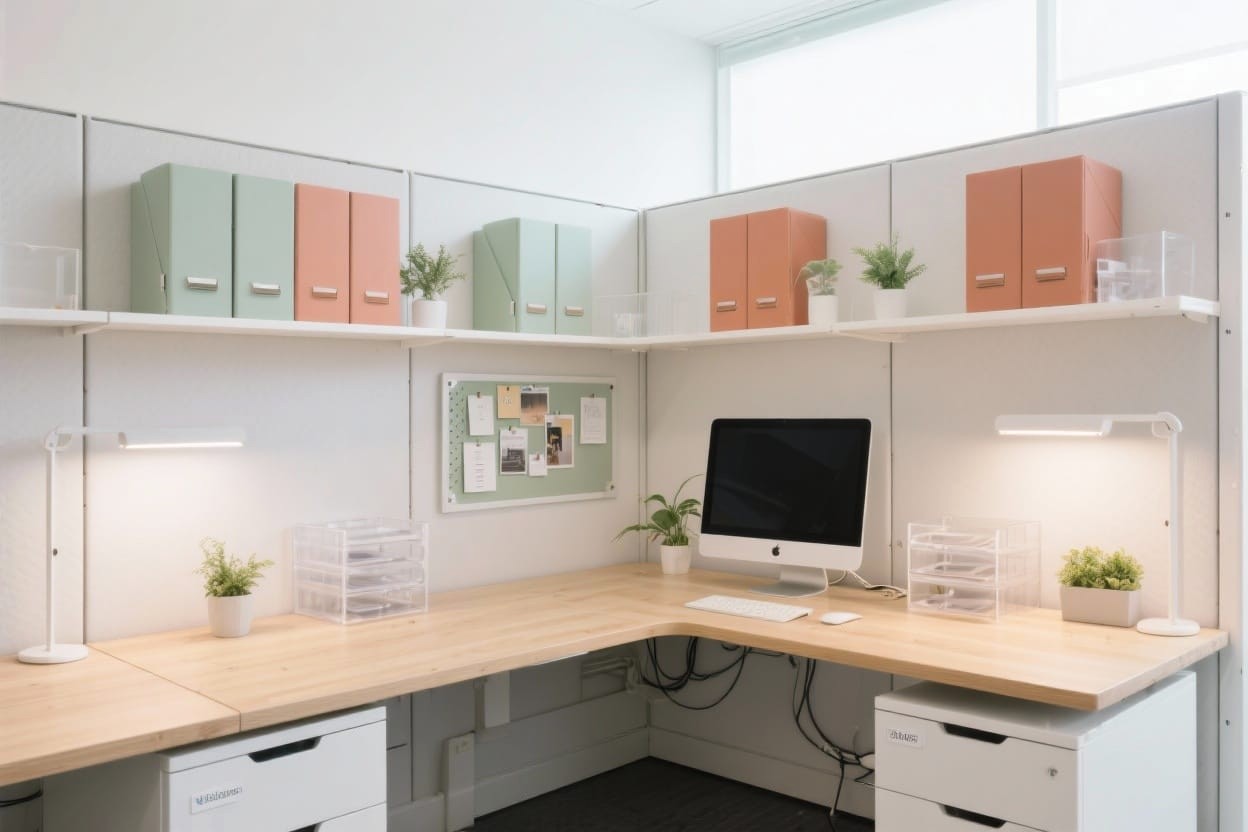
1. A Vertical File Organizer to Reduce Desktop Clutter
In standard corporate cubicles, horizontal desk surface is the most precious and limited asset. Flat horizontal paper trays encourage messy stacking, burying critical project documents beneath incoming memos. Transitioning to a tiered vertical desktop file sorter or a wall-mounted hanging file bracket immediately recovers up to eighty percent of your prime desk real estate. Vertical filing keeps active folders upright, fully visible, and color-coded by urgency or client name. This setup allows you to grab essential contracts, invoices, and reports in a single second without rummaging through stacks. To implement this system effectively, limit your vertical file slots to five or six active, high-priority projects and archive closed files into secondary drawer storage at the end of each week to preserve effortless visibility.
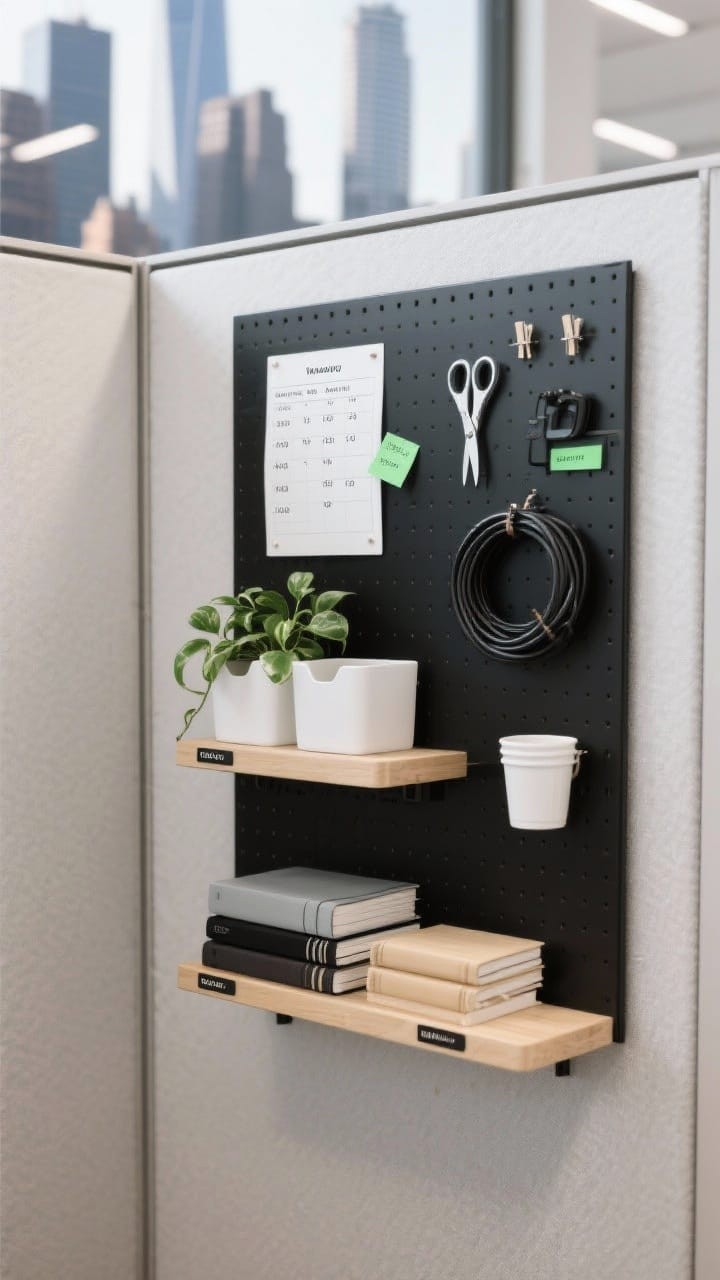
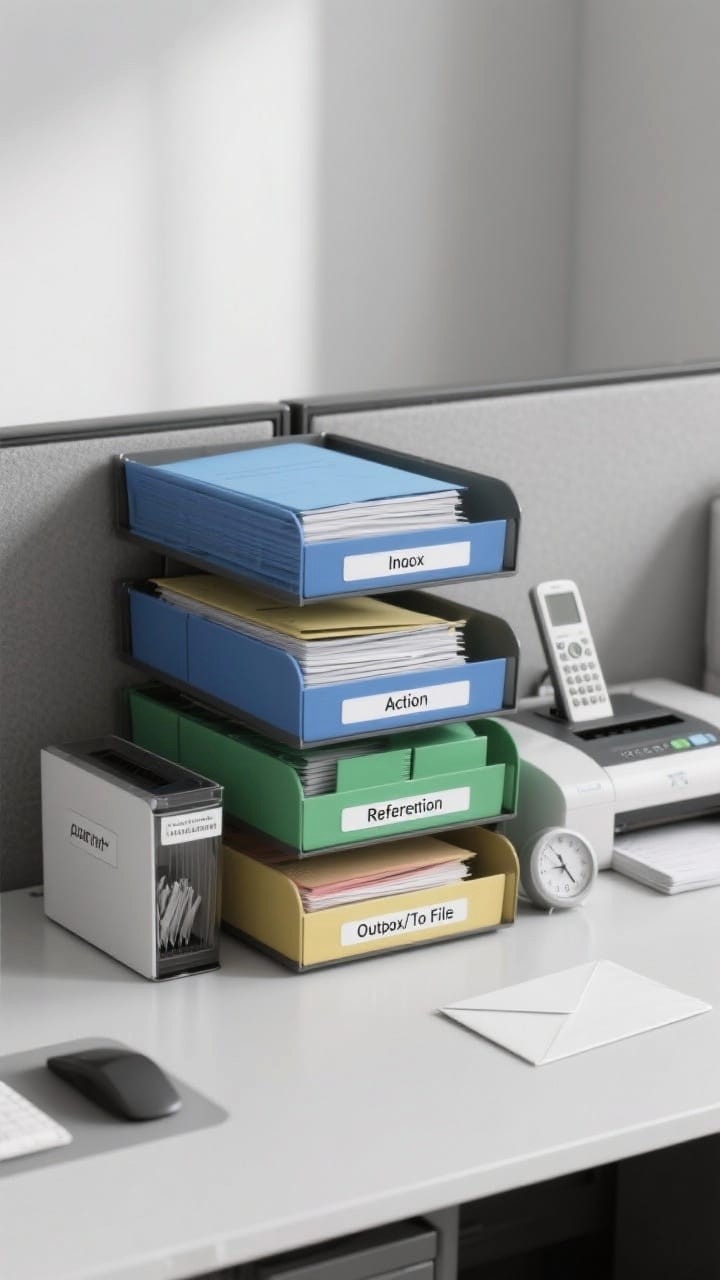
2. A Designated Inbox/Outbox System for Paperwork
Without a defined physical gateway for incoming and outgoing paperwork, loose sheets inevitably scatter across keyboards and coffee mugs, generating mental chaos. Establishing a two-tier desktop inbox and outbox system creates a clear, automated physical workflow that mirrors your digital email management. The top 'Inbox' tray acts as the single landing zone for incoming mail, supervisor reviews, and coworker handoffs, preventing incoming items from interrupting your current focus. The lower 'Outbox' tray holds completed documents ready for filing, mailing, or return. Designating fifteen minutes at the beginning and end of each workday to triage your physical inbox ensures zero pending items fall through the cracks while keeping your primary workstation pristine and focused on the task at hand.
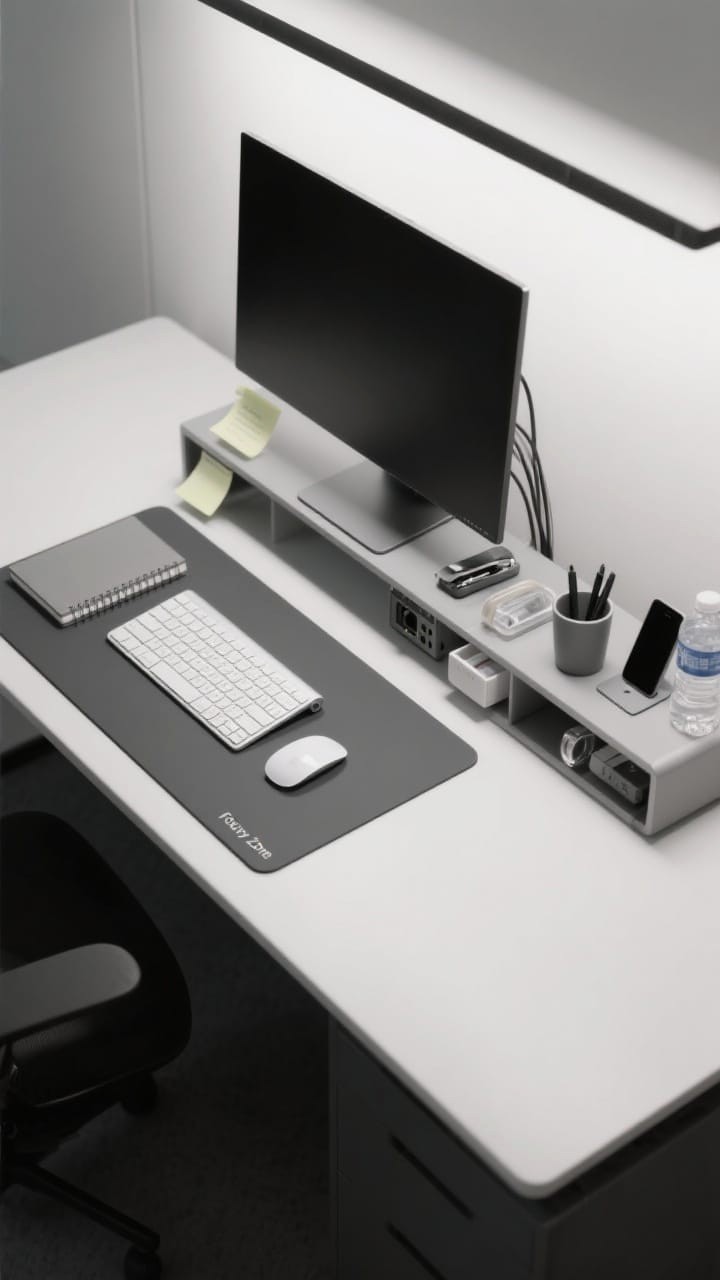
3. Under-Desk Cable Management to Eliminate Visual Clutter
Tangled nests of monitor power cords, laptop chargers, phone cables, and ethernet lines dangling beneath your desk create significant visual noise and present hazardous tripping points. Installing an under-desk cable management spine or a wire mesh cable tray beneath the desk grommet conceals power bricks and multi-outlet strips entirely from view. Use velcro cord wraps, adhesive cable clips, and flexible braided cord sleeves to bundle computer lines into neat, structured conduits. On the desktop, install a weighted magnetic cable collar or a flush-mounted charging dock to keep your phone and tablet cords securely docked and accessible without sliding behind the desk. A clean, cable-free workspace instantly imparts an orderly, modern executive atmosphere that reduces daily subconscious stress.
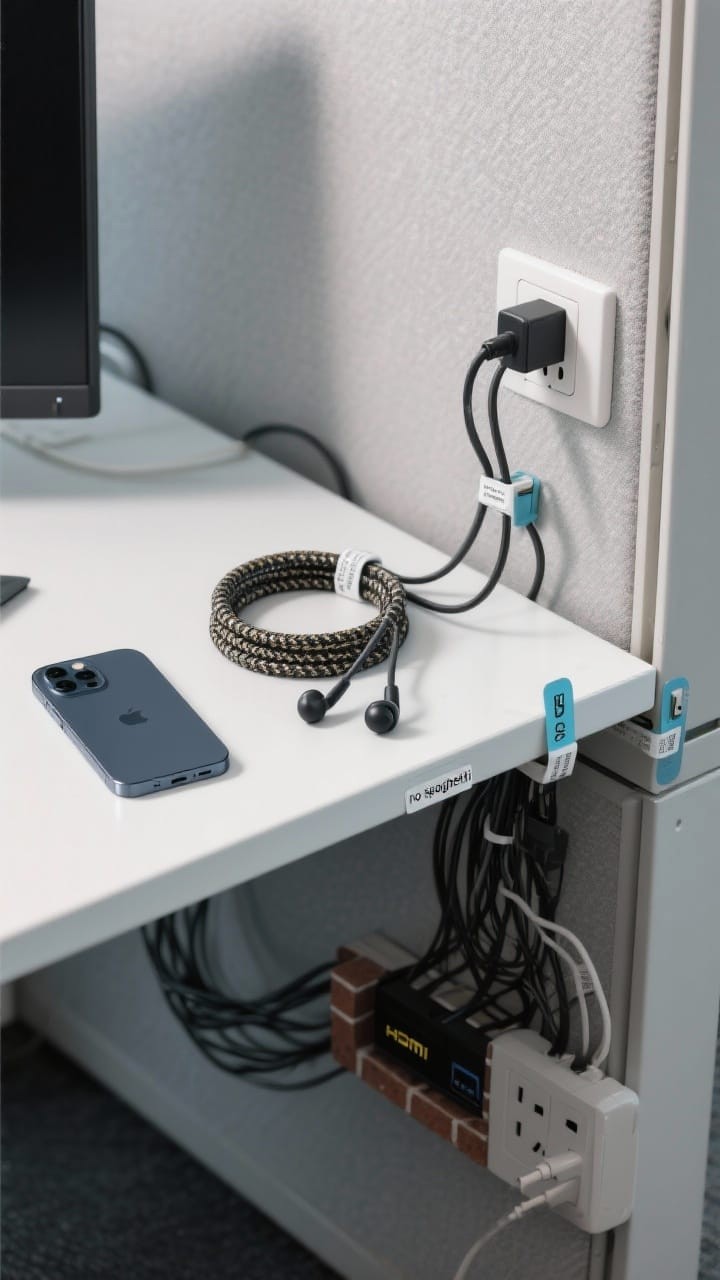
4. A Daily Task Tray for the Current Day's Priorities
Cognitive overload often occurs when too many unrelated project folders are open simultaneously on your desk. A daily task tray is a physical manifestation of the 'Rule of Three' in productivity science: it holds only the files, notebook pages, and reference sheets required for your top three focus priorities of the current business day. Place a sleek leather, acrylic, or ceramic catchall tray directly to the right of your keyboard. Every morning during your planning ritual, pull the necessary documents for your morning sprint and place them into the tray; all other project folders remain stored away. Restricting your active desktop to only the current task dramatically reduces context switching, anchors your concentration, and gives you a tangible sense of accomplishment as the tray empties by day's end.
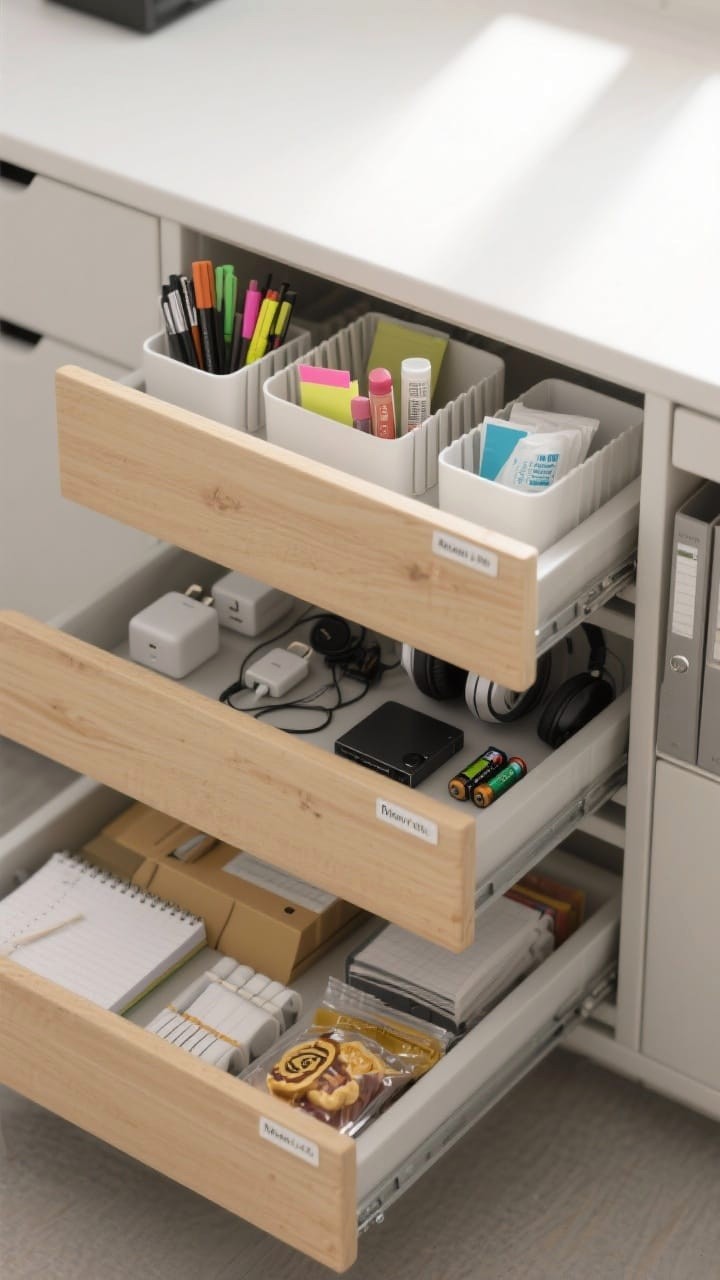
5. Custom Drawer Organizers for Supplies and Small Essentials
Desk drawers frequently devolve into chaotic junk receptacles where pens run dry, paperclips vanish, and USB drives get lost beneath sticky notes. Introducing interlocking modular drawer divider trays instantly transforms chaotic drawers into high-efficiency supply depots. Measure your drawer depth and select sturdy acrylic or bamboo compartment organizers tailored for specific supply categories: one dedicated channel for pens and highlighters, smaller square wells for paperclips and binder clamps, and deeper compartments for sticky notes, charging adapters, and personal care essentials. When every tool has an assigned, exact home, you eliminate the frustrating multi-minute search for a simple pen during urgent phone calls, keeping your workflow frictionless and calm throughout the workday.
6. A Whiteboard or Magnetic Task Board for Visible Priority Tracking
Cubicle fabric partition walls are prime vertical real estate that is often underutilized. Mounting a frameless magnetic whiteboard or a sleek linen pinboard at eye level provides a central dashboard for high-level priority tracking, weekly milestone deadlines, and active project timelines. Dividing your board into simple 'To Do', 'In Progress', and 'Completed' columns allows you to visualize your daily sprint without cluttering your desk with loose sticky notes. Use color-coded magnetic dry-erase cards or neat pushpins to map out deliverables. Having your core priorities prominently displayed within your peripheral vision serves as a constant focus anchor, keeping you aligned with high-impact company goals and insulating you from office distractions.
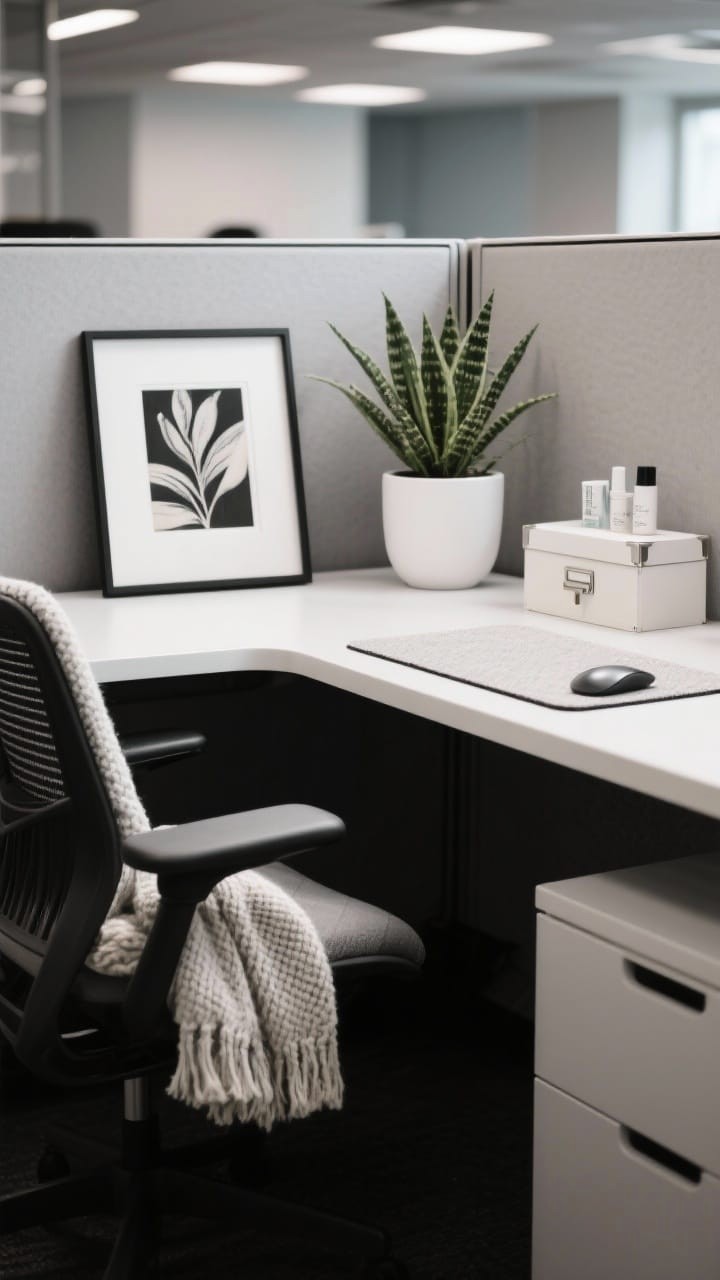
7. Labeled Storage Bins for Personal and Reference Supplies
Shared office supplies, extra printer paper reams, bulk stationery, and personal wellness items (like healthy desk snacks, tea bags, and backup phone chargers) can quickly overwhelm upper cubicle shelves if left loose in cardboard boxes. Investing in matching opaque or semi-translucent storage bins featuring crisp embossed labels brings uniform visual symmetry and professional polish to your overhead shelving. Choose neutral white, charcoal, or warm grey bins with integrated handles for effortless pull-down access. Labeling each bin with specific categories—such as 'Tech Cables', 'Desk Ergonomics', 'Snacks & Tea', and 'Archive Notes'—ensures supplies remain organized and concealed from public sight, eliminating visual clutter and maintaining a pristine workspace facade.
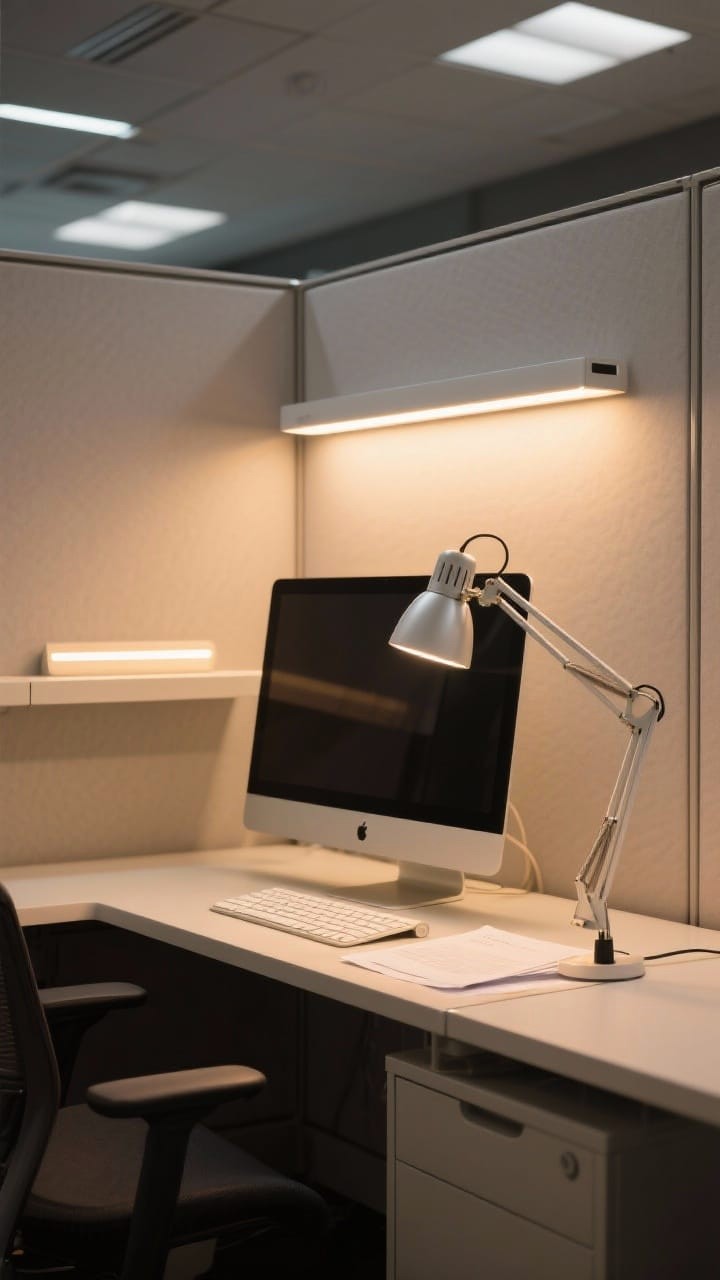
8. A Dedicated Reference Shelf for Frequently Used Materials
Certain materials—such as employee handbooks, brand style guides, industry code books, and quarterly performance binders—are accessed repeatedly throughout the week. Storing them in random drawers or stacking them haphazardly on desk corners wastes valuable retrieval time. Install a dedicated, heavy-duty overhead reference shelf equipped with sturdy bookends to house your core reference library in an upright, indexed sequence. Group binders by project chronologically and use spine labels with clear, bold typography so you can spot and extract the exact reference volume in seconds. Keeping reference materials elevated above your primary desktop preserves active working space while maintaining instant access to vital information when fielding urgent executive inquiries.

9. Noise-Reducing Focus Elements and Dedicated Headphone Stands
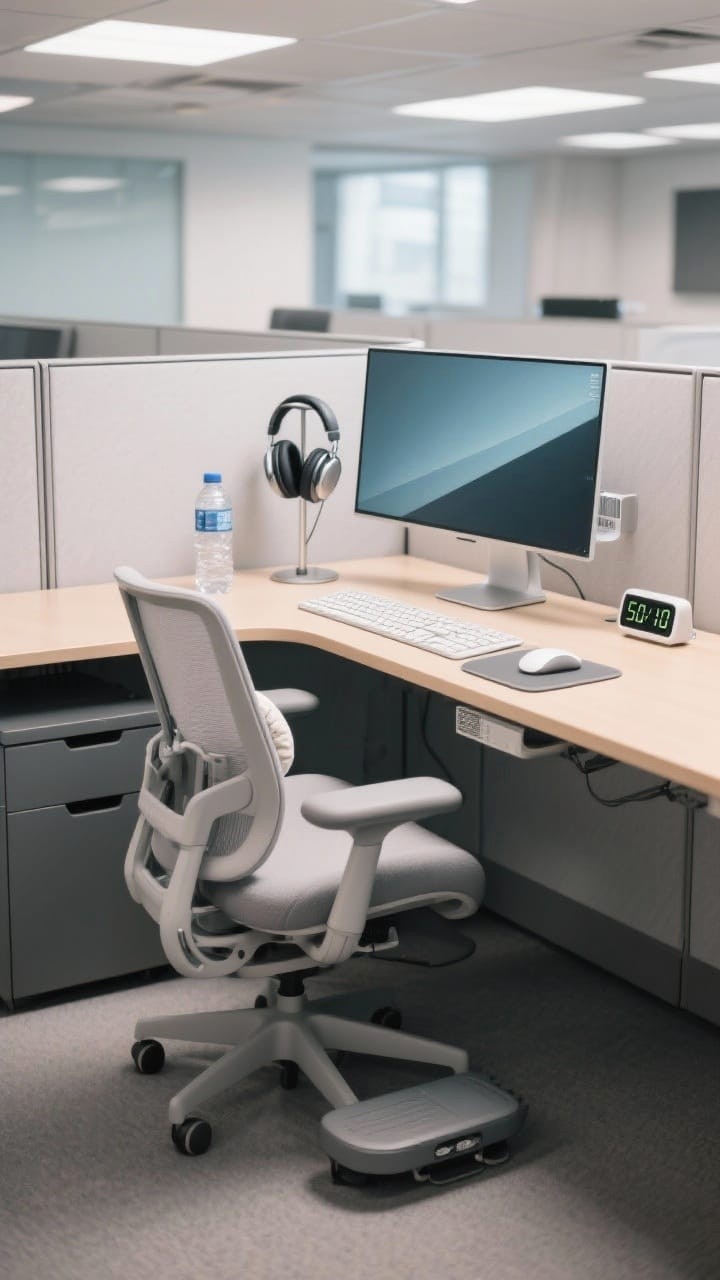
Open-plan corporate offices and cubicle farms are notorious for auditory distractions—from ringing phones and coworker chatter to HVAC hums. Integrating acoustic and sensory management tools directly into your cubicle layout is essential for preserving deep work concentration. Mount a sleek wooden or aluminum headphone stand to the side of your monitor or attach an under-desk swivel hook to keep your active noise-canceling headphones off the desktop and ready for instant deployment. Supplement this with felt acoustic privacy panels mounted to the interior face of your cubicle walls to absorb high-frequency ambient chatter. By making focus tools easily accessible and keeping their storage intentional, you create an auditory shield that protects your deep cognitive flow.
10. A Weekly Friday Afternoon Desk Reset Routine
Even the most meticulously designed cubicle organization system will deteriorate without a disciplined maintenance ritual. Establishing a non-negotiable ten-minute 'Friday Desk Reset' routine ensures your workspace remains pristine week after week. At 4:45 PM every Friday, triage and clear your physical inbox, wipe down your keyboard and desktop with disinfectant wipes, return all stationery to their assigned drawer dividers, and file finished project folders into archival storage. Finally, set out your daily task tray with three blank priority cards ready for Monday morning. Starting your Monday at a spotless, organized desk completely eliminates Sunday night dread and allows you to dive directly into high-value work with clarity, enthusiasm, and momentum.